

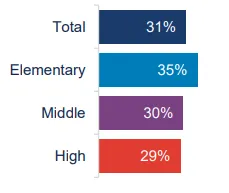
A third of parents (31%) say that the concept of "invisible" money—non-cash, digital currency—is a hard concept for their children to grasp.
As children, we learn about money by counting literal dollars and cents, but what happens when the payment becomes more abstract while the spending remains real? As part of our ongoing financial literacy research, Bread Financial conducted a new survey among parents/guardians of children K-12* to understand the challenges of teaching young minds about spending in an increasingly digital society. Read on for some of our top insights.
Is invisible money real money?
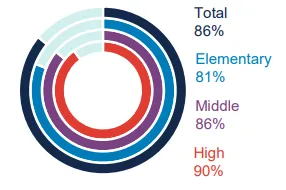
Most parents/guardians (86% of those surveyed) believe their children fundamentally understand invisible money is real money that can run out. High schoolers seem to know this best with understanding naturally declining among younger age groups.
“My child understands that invisible money is real money that can run out.”
Strongly agree or agree among parents/guardians by grade level
Grasping the invisible money concept is hard
While most believe their children know invisible money is real money, 31% admit this is still a hard concept to grasp in practice. Elementary children have the toughest time with this concept, but middle and high schoolers aren’t far behind.
Hard to understand: Invisible money still counts as spending real money
Among parents/guardians by grade level
Familiarity with invisible money types
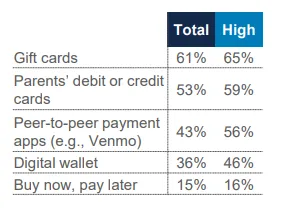
Gift cards are the top type of invisible currency children are familiar with, but parents/guardians indicate a significant portion also have knowledge of common financing tools, particularly among the high school set.
Types of invisible money children have used or been exposed to (select responses)
Total respondents versus elementary school parents/guardians
Key takeaway: Becoming financially fluent with what we cannot see
Invisible money is a challenging subject to teach to children because they can't see or touch it, but it's quickly becoming the foundation of how we pay and use currency every day. Building comfort with it now means that today’s youngest consumers will be ready for a future where almost every transaction could happen digitally.
Source: Bread Financial proprietary study, Young Minds + Invisible Money, May 2026.
* Respondents: Parents/guardians with children in elementary (grades K-5), middle (grades 6-8) or high (grades 9-12) school who have engaged their children in educational conversations/guidance about finances/money.
About Bread Financial®
Bread Financial® (NYSE: BFH) is a tech-forward financial services company that provides simple, personalized payment, lending and saving solutions to millions of U.S. consumers. Our payment solutions deliver growth for some of the most recognized brands in travel & entertainment, health & beauty, technology, electronics, jewelry, home and specialty apparel through our co-brand and private label credit cards and pay-over-time products providing choice and value to our shared customers. Additionally, we offer Bread Financial general purpose credit cards and saving products that empower our customers and their passions for a better life.
Bread Financial proudly marks 30 years of success in 2026. To learn more about our global associates, our performance and our sustainability progress, visit breadfinancial.com or follow us on Instagram and LinkedIn.